
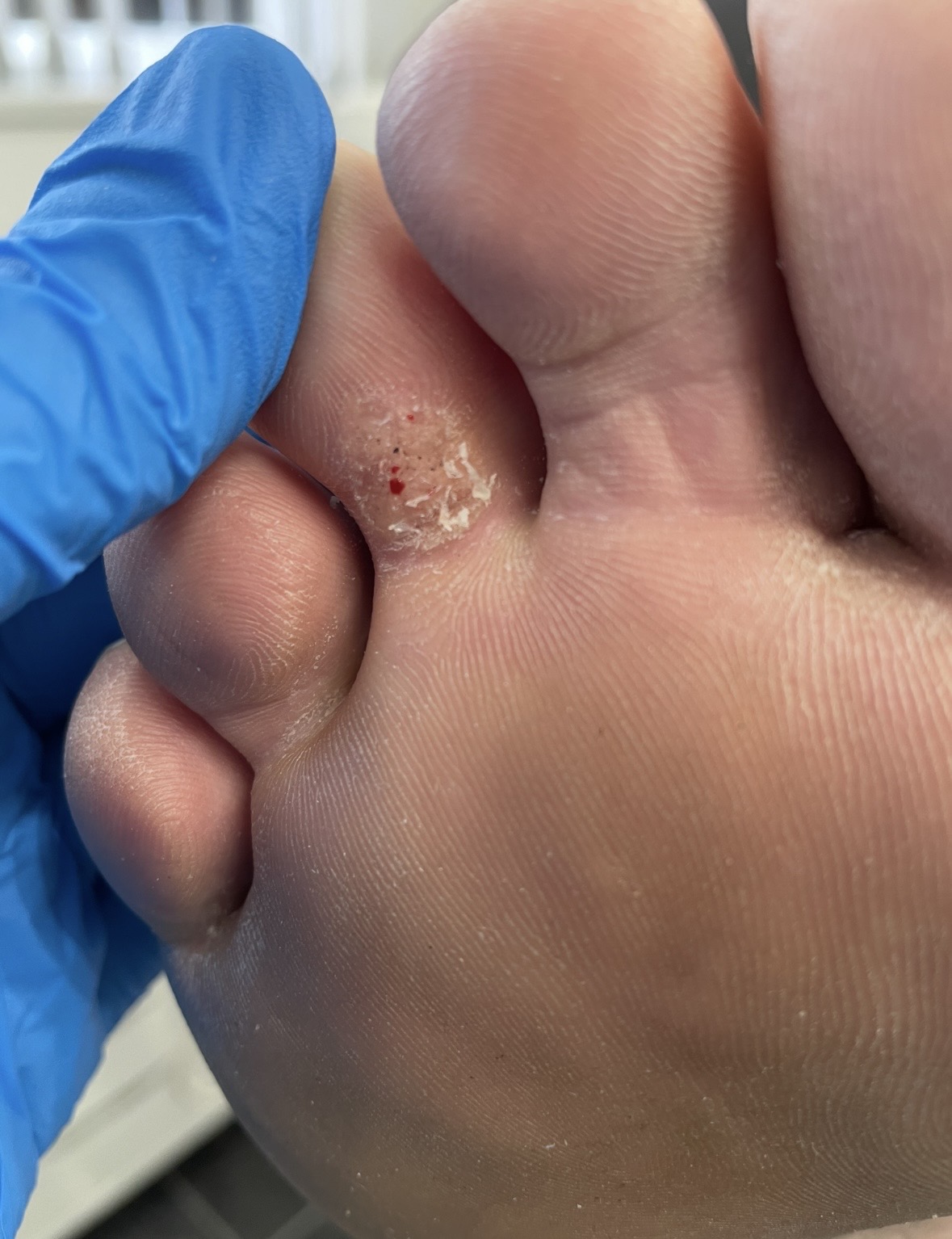
Verruca in Needling: A Treatment for Persistent Verrucae
Verrucae can be particularly frustrating. Some disappear without any treatment, while others remain for months or years despite attempts to treat them.
If you have a persistent or troublesome verruca, you may have already tried several approaches without seeing the results you hoped for. At Manor Podiatry, one treatment option we may discuss is verruca needling.
There is clinical research supporting the use of this technique, with some studies reporting positive outcomes. However, it is important to be realistic: verruca needling is not guaranteed to work, and no single treatment is successful for everyone.
What is a verruca?
A verruca is a viral skin infection caused by certain strains of the human papillomavirus (HPV). When the virus enters the skin, it can cause an area of thickened, altered skin to develop.
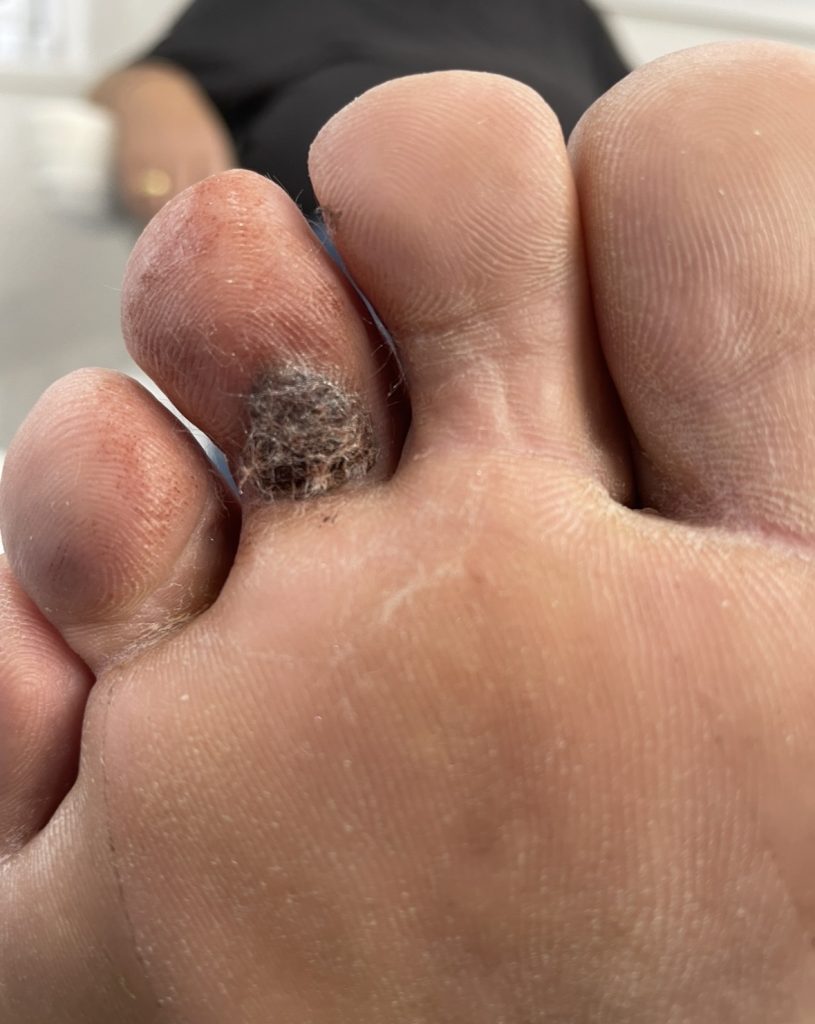
On the sole of the foot, verrucae may become uncomfortable because the pressure of standing and walking can push the affected tissue into the surrounding skin. They can occur on their own or in groups and may have small dark dots visible within them.
Some verrucae are painless and may disappear without treatment as the immune system eventually responds to the virus. Others can be persistent, painful or troublesome enough to require management.
What is verruca needling?
Verruca needling is a minor procedure carried out using local anaesthetic. Once the treatment area is numb, the verruca is punctured multiple times with a sterile needle.
The purpose of the treatment is to create a controlled injury within the verruca tissue. This is thought to bring viral material into contact with deeper tissues and stimulate an inflammatory and immune response.
The technique is commonly known as Falknor’s needling method, after the clinician who first described the approach.
Rather than simply trying to destroy the verruca from the surface, needling aims to encourage the body’s own immune system to recognise and respond to the HPV infection.
What does the research tell us?
Clinical studies have produced encouraging results for verruca needling.
Longhurst and Bristow (2013) reviewed outcomes in patients who had received needling for plantar verrucae. Their study reported complete resolution in 69% of participants eight weeks after treatment, with additional patients experiencing improvements in the size of the lesion or associated discomfort.
A randomised pilot study by Cunningham et al. (2014) compared needling with liquid nitrogen cryotherapy. The researchers reported a higher clearance rate in the needling group at the 12-week assessment.
It is important, however, to consider the full picture. The EVerT2 randomised controlled trial found that needling was not superior to simple callus debridement for complete verruca clearance at 12 weeks, although differences in pain outcomes were identified (Hashmi et al., 2017).
These findings demonstrate why we should be cautious about claiming a guaranteed success rate. The research supports verruca needling as a reasonable evidence-informed treatment option, but results have varied between studies and individuals.
What happens during treatment?
The first step is an assessment to determine whether verruca needling is an appropriate treatment option for you.
If treatment is suitable, the procedure generally involves:
- Examining the verruca and confirming the diagnosis
- Discussing the potential benefits, limitations and risks of treatment
- Administering local anaesthetic
- Needling the verruca using a sterile technique
- Applying a dressing
- Providing aftercare advice
In many cases, needling is carried out during a single treatment session.
Will the procedure be painful?
Local anaesthetic is used before the procedure so that the treatment area is numb. You should therefore not experience pain from the needling itself.
Once the anaesthetic wears off, it is common for the area to feel sore or tender. The level of discomfort varies between individuals, and we will provide clear advice on caring for the area following treatment.
Is verruca needling suitable for everyone?
No. As with any procedure, suitability depends on the individual.
Before recommending treatment, we will take into account factors such as your medical history, circulation, sensation, immune status, the appearance and location of the verruca, and any previous treatments.
We will also consider whether another management approach may be more suitable for you.
Is success guaranteed?
No. We cannot guarantee that a verruca will disappear following needling.
Some patients experience complete clearance, while others may notice only partial improvement or no significant change.
The body’s response to the virus differs from person to person, which means it is not possible to predict the outcome with certainty. Verrucae can also resolve naturally, making treatment outcomes difficult to compare between individuals.
We therefore believe it is important to discuss both the potential benefits and the limitations of treatment before proceeding.
References
Cunningham, D. J., Brimage, J. T., Naraghi, R. N., et al. (2014). Needling versus liquid nitrogen cryotherapy for the treatment of pedal warts: A randomized controlled pilot study. Journal of the American Podiatric Medical Association, 104(4), 394–401. https://doi.org/10.7547/0003-0538-104.4.394
Hashmi, F., Fairhurst, C., Cockayne, S., Cullen, M., Bell, K., Coleman, E., Harrison-Blount, M., & Torgerson, D. (2017). The EVerT2 (Effective Verruca Treatments 2) trial: A randomized controlled trial of needling vs. nonsurgical debridement for the treatment of plantar verrucae. British Journal of Dermatology, 177(5), 1285–1292. https://doi.org/10.1111/bjd.15751
Longhurst, B., & Bristow, I. (2013). The treatment of verrucae pedis using Falknor’s needling method: A review of 46 cases. Journal of Clinical Medicine, 2(2), 13–21. https://doi.org/10.3390/jcm2020013